
The Untold Stories of Lebanese Veiled Females
Jan 21, 2015
Story
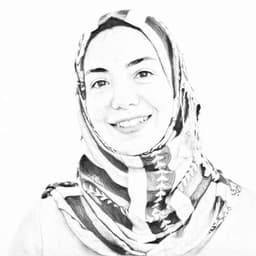

The Untold Stories of Lebanese Veiled Females
My classmates in grade 12 always saw me as a news reporter or anchor, so did my kind Arabic instructor. That made me very happy. It actually still makes me happy today. Being a news anchor has always been my childhood dream. Yet, it is no longer the dream I am pursuing. Enrolling as a communication arts student at university was one step towards achieving this dream, but I never realized that the world is so harsh to stop even simpler dreams from coming true. For, in brief, what media outlet here in Lebanon would employ a reporter or news anchor that covers her hair?
In Lebanon, females struggle to have equal footing in the workplace, as statistics show that only 23% of the workforce is constituted of females. The shortage of females in the workforce is indeed an important issue that must be addressed, but beneath that, there are females who are discriminated against not because of their natural born sex, but rather their dress code which is a simple right guaranteed by the basic motto of freedom of the choice. Veiled women in Lebanon continuously face discrimination in their attempts to be employed. The worst part about this issue is the lack of statistical documentation and the refusal of decision makers to address the situation.
In an academic research I am currently conducting at the American University of Beirut, where I am pursuing my masters in sociology, I discovered that there were around 500 registered students who wear a veil in the academic year 2011-2012. I am sure there are at least a hundred more students to add to this number from other universities in the country. To put it more concretely, it is not a question of whether there are competitive, well-educated young women who wear a veil that could be employed in this country. The question is: where are they?
Allow me here to get back to my dream. Let me start from the moment I graduated with my Bachelor of Arts back in 2009. After completing my degree, I was offered a job at a TV channel, but I turned it down without regret. This channel was owned by a conservative religious party, and becoming an employee would create unwanted associations. What other TV channels would later hire an employee that had worked for a media organization with such orientation? And, on my side, how much could this position satisfy my personal ambitions and bring me closer to my dream?
There is a larger issue to be addressed here: the polarization of society between religious and secular institutions. In general, secular institutions tend not to hire employees that may put their neutrality at stake. Unfortunately, many perceive veiled employees as so because they consider the veil a sociopolitical sign rather than a religious one. This perception is provoking the discrimination and further dividing the society into two blocs. When a veiled lady cannot find a job, she has two choices: either staying at home, or retreating to religious institutions. By religious institutions, I mean the sociopolitical and humanitarian institutions that are managed by different religious groups or authorities. Many of these institutions do impressive work, but they are isolated from the rest of the society and they have their unique religious conservative culture. Practically, when a person starts a job at one of these institutions, it is very hard for him or her to make the move to other ordinary local institutions in the society. I know some people who once worked in similar institutions, but then would not include that on their curriculum vitae for the negative impression it would give. To put it more concretely, people working in these institutions are isolated from the rest of the society, and as the problem is snowballing. As the number of these ‘isolated’ people is increasing, so is the polarization between the secular and the religious communities.
Let me once again get back to my dream and tell you more about the Lebanese TV stations. First, I must make it clear that I am aware that I am not a beautiful reporter to hire, nor the anchor with the best voice to tell the news, but I can see that I have all the qualifications and skills of the reporters on TV. A few months ago, a local channel hired a blind reporter and broadcasted over and over again news about employing this person. Indeed, it is a positive thing to integrate people with special needs into our society, but I understand this in rather a different sense: if you are blind it is much easier to get hired as a reporter than if you are veiled.
Interestingly, the host of a famous show on this same channel, Mr. Tony Khalifeh, discussed about a year ago the issue of discrimination against veiled women journalists. But that was the only time I ever read or heard the problem discussed in the social or mainstream media. Then, when I was conducting some research for this piece, I came across the blog of a young veiled Lebanese woman who faced discrimination because of her veil and was denied a job. Frustrated by the incident she established a blog called ‘7ijabi’ (literally: “my veil”) to address the topic. The first account narrative of the blogger is worth a read:
“I was invited for my final interview where I was sure that I would be signing a contract, however my expectations were not in the right place. “Are you willing to change your attire a bit? “Asked the human resources manager during the interview? “What about your veil, do you always wear it like this “. I started to understand where he was going and reality started to sink in: I was facing discrimination …… I could not understand how by having a piece of cloth over head I was less qualified”
Not addressing the issue of discrimination against veiled women is, in my opinion, a worse problem than the actual discrimination. It is making our society more polarized and dividing it into ‘us’ and ‘them’. I personally do not know where I fit. My veil is part of me, but at the same time, I want to hold a decent prominent job and, most of all, contribute to the whole society. I, too, cannot understand how wearing a veil makes me less qualified.
It is bitter at times to hear stories of discrimination from friends and acquaintances. A friend of mine was working with a United Nations program here in Lebanon, but her director often informed her each time people made a discriminatory comment about her being unpresentable. Presentable here has nothing to do with the outer beauty of my friend, but rather with the veil that covers her hair. It is important to note that in this case the employer is not a local institution, but rather an international one associated with the United Nations. Provoke your imagination, then, to understand how local institutions perceive veiled women.
Now, get back to reality. There’s still some hope.
Suppose you were the young blogger who was questioned in a job interview about her veil. Consider that you can skillfully channel your disappointment and communicate to the interviewer that you best fit the job despite what may be perceived as barriers by him or her. Developing your public speaking and interpersonal communication skills is always an asset to skillfully avert any type of discrimination and to further demonstrate your competence as an employee. In this context, one can elegantly reply to different kinds of questions and explain why the veil is not a barrier for performing this particular job. In addition to equipping yourself with techniques to face discrimination, you should believe in yourself in the first place. “Start being strong from the inside, and your employer is going to see it,” advises the inspiring veiled woman I met few days ago.
Her name is Hiba Khodr. She covers her hair with a plain white veil and dresses in a simple long coat. One of no more than five full-time veiled faculty members, she is an assistant professor in the Department of Public Administration and Political Science at the American University of Beirut. “The moment you wear a veil you are negatively labeled and placed in a certain category,” Khodr says. She recalls that when she first joined the institution some fellow professors did not even say hi.
“A women’s beauty is her first weapon in the society,” as Khodr puts it, “but when you wear a veil you have lost this weapon and you are obliged to work on your insight, intellect, and behavior,” she adds. The end point, as Khodr asserts, “the hijab will bring the best out of you.” I find Khodr’s story a case in point that, despite the widespread discrimination against veiled women in the society, there is still a path to be in a prominent position at a decent institution. You can still pursue your dream and aim high. Khodr asserts that there is no secret recipe behind her employment, yet emphasized that one should be strong and believe in herself at the first place to reach what she aims.
Now, it may be the time to explain why I did not get back to my dream yet.
Imagine that, by some chance, a director or producer in some channel that hires veiled women sends me a job offer. Let’s further assume that I accept it. You will not read these words anymore. You will probably think that all females in Lebanon are fully veiled. You may then not know that there are different kinds of veil. You may have the misconception that my vision mentor had about the veil being a niqab . You may further assume that Muslim women are a homogenous bloc, all having the same perceptions about themselves and the society. You will never have the chance to know how different I perceive my veil than my sister, and how a potential employer views me differently than other candidates. You will not know about the discrimination against veiled people in the supposedly Middle Eastern conservative region. I will probably achieve my dream and be a news anchor or reporter, but hundreds of veiled young women will be here struggling with the unaddressed and veiled problem.
I believe this is the first step towards a solution to any kind of discrimination. I should talk about it, you should talk about it, and everyone who experiences discrimination or hears of a case should speak about it. Let us stop considering our experiences personal incidents and look at the common factors of them. There are indeed veiled unqualified women; there are indeed veiled women who have been denied a job for many factors other than their veil; but there is at the end of the day this type of discrimination against veiled women that is accumulating day after day.
As it is unjust to force women in some countries to wear a veil so that they can leave their houses or have a job, it is unjust to deny women in a country like mine a job because of the veil. We should support each other in abolishing these different types of discrimination, starting with our own neighborhoods and communities. This is why, my fella, I invite you to sign this petition that I started to stop discrimination against veiled women in the workplace in Lebanon. Let your voice count!
This article is part of a writing assignment for Voices of Our Future a program of World Pulse that provides rigorous digital media and citizen journalism training for grassroots women leaders. World Pulse lifts and unites the voices of women from some of the most unheard regions of the world.
Citation
1) Lebanese Central Administration of Statistics & UNICEF, 2009. Multiple Indicators Cluster Survey 2009. Final report, p. 71. Beirut: Lebanon.
2) The blog can be accessed at the following link: www.hijabi.wordpress
3) The term ‘veil’ is used in this piece to signify the piece of clothe covering the hair only. The niqab is the common term for the veil that covers the face and hair.