
The Rural Woman Is Not the Problem. She has always been part of the solution.
Jul 6, 2026
Story
Seeking
Visibility

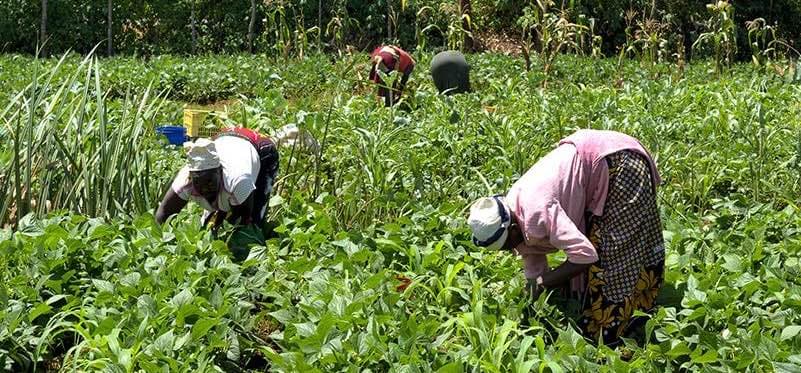
Rural women working together in a farm field, representing the strength, resilience, and often unseen labour of women who feed our communities.
Rural Women Don’t Need Saving.
They Need the World to Stop Misunderstanding Them.
The biggest lesson agriculture has taught me has nothing to do with farming.
It is this:
The people closest to the problem are often the farthest from the decisions that shape their lives.
When I first entered agriculture, I expected to learn about cassava varieties, soil health, fertilizers, weather patterns, and markets.
I learned all of those things.
But none of them changed me as much as the people did.
The more time I spent on farms, the more I found myself watching the women.
Long before sunrise, they were already awake.
Some had prepared breakfast before heading to the farm. Others carried babies on their backs while planting or harvesting.
Many worked from dawn until dusk, only to return home and begin another shift of unpaid care work , cooking, cleaning, fetching water, caring for children, and supporting their families.
I watched women negotiate prices in local markets after weeks of labour, often accepting less than what their produce was worth because they had no bargaining power.
I met women who had farmed for decades but had never received formal agricultural training.
Women who could identify changes in the soil simply by looking at it.
Women who understood planting seasons better than any textbook could explain.
Women who possessed generations of agricultural knowledge but had never once been invited into a room where agricultural decisions were being made.
That stayed with me.
Because the more I observed, the more I realized that agriculture is not simply about food production.
Agriculture is about people.
It is about power.
It is about information.
It is about opportunity.
And perhaps most importantly, it is about who gets seen.
We often celebrate harvests.
We celebrate exports.
We celebrate innovations.
But how often do we celebrate the women whose labour makes those achievements possible?
Some reports estimate that women produce a substantial share of Africa’s food. Yet many still struggle to access land ownership, affordable financing, quality inputs, extension services, reliable markets, technology, and leadership opportunities.
That contradiction should concern all of us.
Because it tells me that the issue is not a lack of ability.
It is a failure of our systems.
One phrase I hear repeatedly is that rural women are “vulnerable.”
I understand why people use it.
But every time I hear it, I hesitate.
Vulnerability is not the first word that comes to mind when I think about the women I have met.
I think of resilience.
I think of ingenuity.
I think of persistence.
These are women who continue farming despite unpredictable rainfall, rising production costs, limited infrastructure, fluctuating market prices, and countless uncertainties that would discourage many of us.
If resilience alone created prosperity, rural women would already be among the wealthiest people in the world.
But resilience has never been enough.
Resilience cannot replace access.
Hard work cannot replace fair opportunities.
Determination cannot overcome systems that consistently exclude the very people they depend upon.
That realization completely changed the way I think about agriculture.
I stopped seeing it as the business of growing crops.
I started seeing it as the work of redesigning systems.
Because food systems are ultimately human systems.
They determine who gets counted in the data.
Who receives funding.
Who has access to knowledge.
Who influences policy.
Who is invited into leadership.
And who remains invisible.
This is the conviction that led me to establish Her Harvest Africa.
Not because I believe rural women need someone to speak for them.
They have voices.
They have wisdom.
They have solutions.
What they often lack are systems that listen.
My work is not about creating heroes.
It is about helping build ecosystems where rural women have access to information, education, markets, leadership opportunities, and the dignity of being recognized as experts in their own right.
I believe Africa’s future will not be transformed simply by increasing agricultural production.
It will be transformed when we begin designing food systems that value the people behind the harvest as much as the harvest itself.
Perhaps the greatest untapped resource on this continent is not hidden beneath our soil.
Perhaps it has been standing in our fields all along.
The rural woman.
Not waiting to be rescued.
Waiting to be recognized.
I don’t want to spend my life simply talking about the challenges rural women face.
I want to help build systems where their potential is recognized, their voices influence decisions, and their contributions are valued.
If my work leaves one lasting legacy, I hope it is this: that the world no longer sees rural women as beneficiaries of development, but as the architects of Africa’s future.
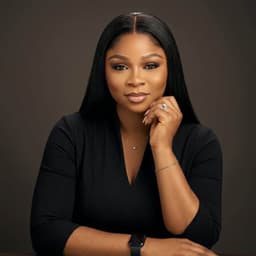
Peace Lopez
Founder, Her Harvest Africa
- Shout Your Vision
- Our Impact
- Food Security