
The Girl from the Drain
May 30, 2025
Story
Seeking
Feedback


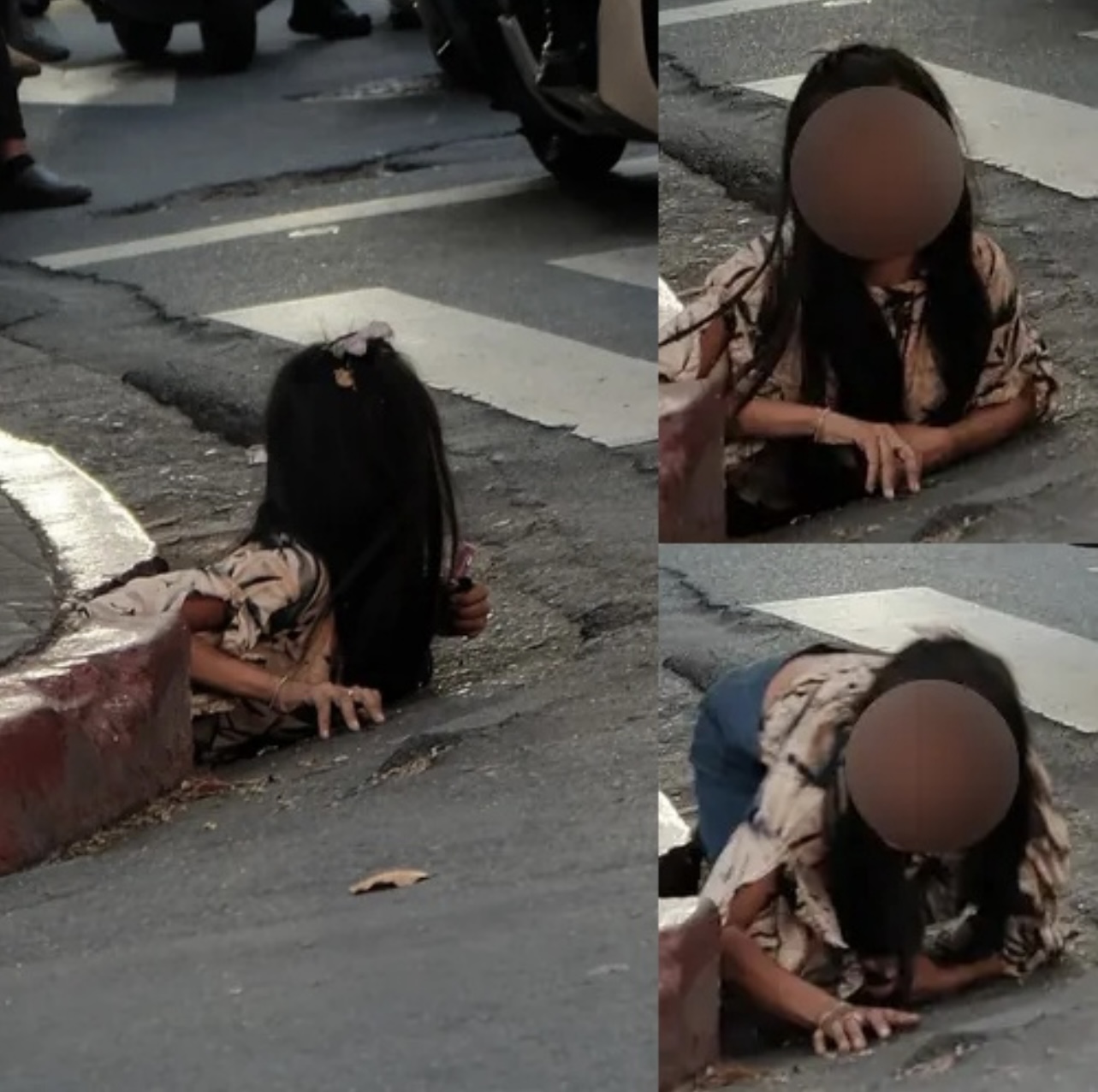
In the blistering heat of a late May afternoon, amidst the polished facades of Makati’s high-rises, a girl from an ”unseen underworld” emerged.
It looked like a scene from The Ring or Sadako, as a girl, hair unkempt, cloaked not in supernatural horror, but in the grime of systemic poverty. She clawed her way out of a sewer hole, at the corner of Rufino and Adelantado Streets in the plush Barangay Bel-Air, right in the heart of the country’s financial district. Her hair was tangled, her dress - perhaps once white, now slick with sewer sludge and city soot.
Stunned pedestrians stared, some took photos but no one reached out. The footage quickly went viral on social media. After all, who lives in a sewer in one of Southeast Asia’s most expensive business districts? As it turns out, people do and this is not the first time that people living along the central district’s creek area was reported.
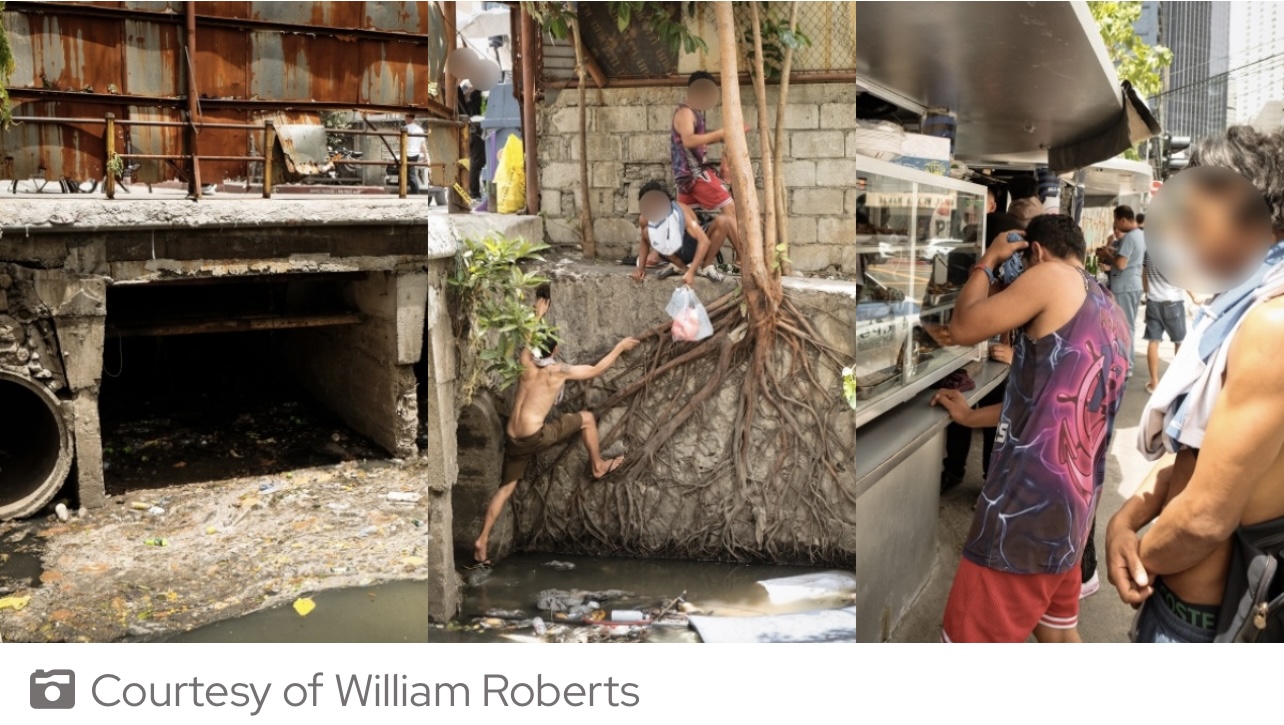
Years ago, a local television station aired a segment about people living inside the walls of a bridge in the same city. Yet today, in the same streets where wealth is flaunted in condos, busy business offices and rich establishments, people still live in drainage canals, in creeks, and under bridges. The only thing that has changed now is the cast. Some may have moved on, perished, relocated, replaced by new “residents” but the situation remains the same - poverty is screaming right at our faces and the effort to eradicate it still isn’t enough.
The girl, later identified as Rose, does not really live in the sewer. She only dropped an item in the sewer which she went into to retrieve it. She is one of at least 15 individuals who are living beneath the city in a tunnel system near the Makati Medical Center. They are called “taong grasa” - literally, “grease people” - street dwellers whose presence is often reduced in the hierarchy of society, the very bottom, maybe often, even the least prioritized.
But they are not just nameless vagrants. Each one has a story to tell.
There’s Jerwin, once a delivery driver, who lost his home when his employer died. There’s Rommel, whose informal settlement was bulldozed during a road-clearing operation. They and others like them call their home along the creek the “Botanical Garden”—a euphemism to disguise the reality of sewer life. The name may sound fanciful or whimsical, but there’s nothing romantic about sleeping on wet concrete and breathing in human or animal waste.
The emergence of the girl from the drain was not a scene from a horror movie - it was a waking nightmare, a ghost story not of vengeful spirits, but of people rendered invisible by decades of systemic failure. What makes her story uniquely powerful is not just her struggle, but what it reveals - how quickly a person can descend into invisibility, and how little the public systems are equipped to catch them when they do. Her situation is a slap on reality, her presence isn’t an exception but a reflection of a system that persistently neglects millions like her.
In Makati, the contrast is extreme. On the surface: luxury cars, multinational banks, rooftop bars. Below: people surviving in flood-prone tunnels, breathing methane and barely eating their daily meals, sometimes composed of just salt or soy and rice shared among them.
As of this writing, the Department of Social Welfare and Development (DSWD) has investigated the story of Rose. She was given Php80,000 (around USD1,430) to start a business with her husband. That’s not too much to help one person. But as of 2023 statistics by World Bank standards, *53.5% of the Philippines’ 117.3 million population in 2023 was below the USD5.50 poverty line. DSWD has come out with programs like The Pag-abot Center which extends assistance to the vulnerable and disadvantaged by providing them with temporary shelter so they can start anew. Rose has committed to coordinate with Pag-abot Center to help convince others living in the streets to go to the center and be given appropriate interventions.
Though the Philippines has made progress in reducing poverty and aims to further reduce it to a single-digit level by 2028, it still significantly lags compared to its neighbors in the Southeast Asian region:
: • Vietnam: ~20%
• Thailand: ~12%
• Malaysia: ~2.3%
(* NOTE: The Philippines’ official national poverty rate stands at 15.5% using local metrics that does not capture the full scale of vulnerability among the population).
Poverty is a global issue, and addressing it requires coordinated action at both local and international levels by governments and non-governmental organizations alike. While the girl emerging from the drain is a striking image, there are even more severe cases elsewhere. Over the past two decades, statistics show ongoing efforts to reduce poverty worldwide. Real progress, however, depends on unified action and unwavering political will.
ctto for the pictures: William Roberts
- Survivor Stories
- Stronger Together
- Behind the Headlines