
Stronger Together: How One Kenyan Small Community Is Pursuing the Greatest Objectives in t
Jan 25, 2026
Story
Seeking
Visibility
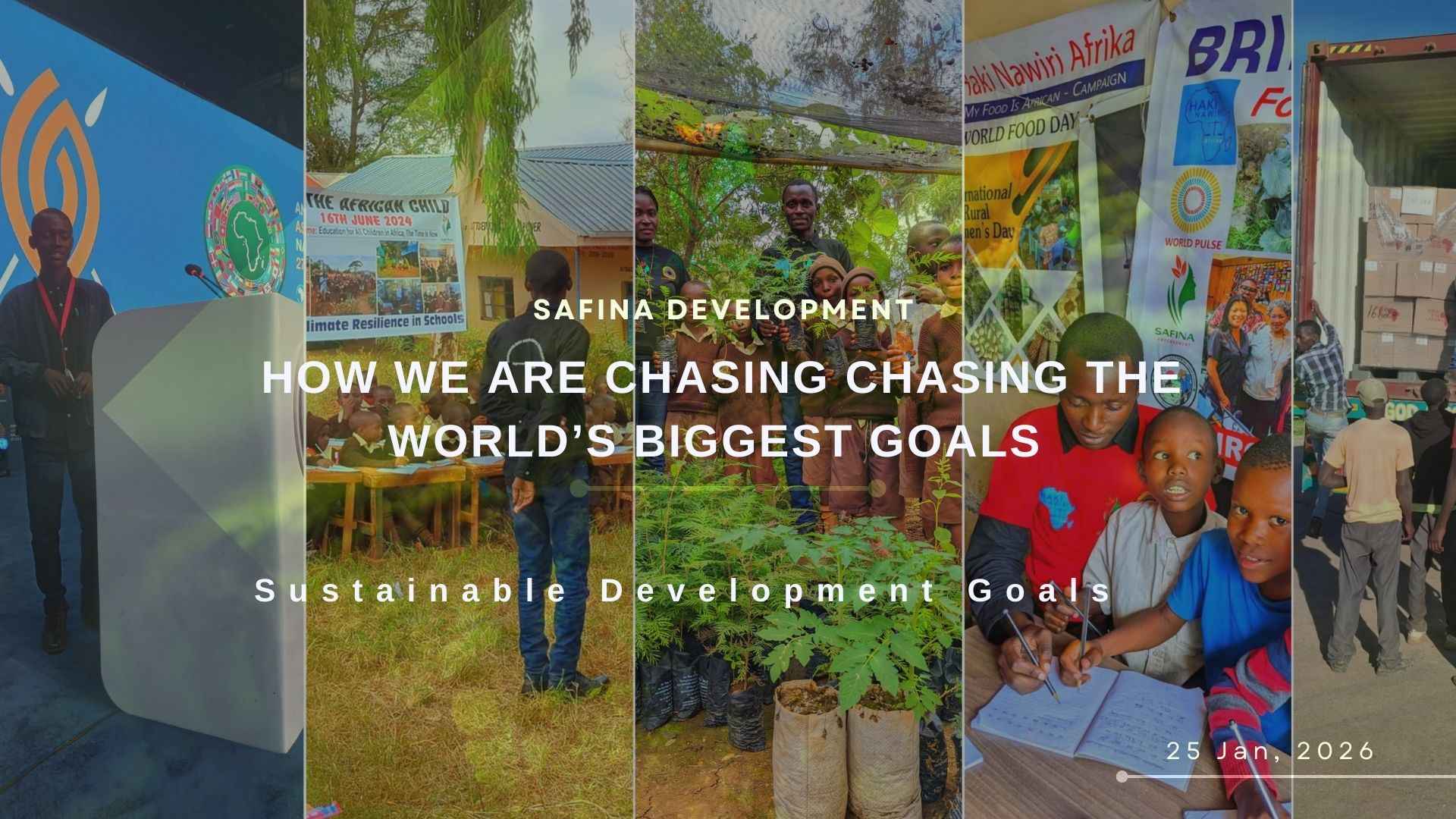
Photo Credit: safina organization
Stonger Together
Did you know that by 2030, there is a global plan to eradicate poverty, safeguard the environment, and improve everyone's quality of life?
They are known as the SDGs, or Sustainable Development Goals.
After years of international discussions about what humanity actually needs to survive and prosper, the United Nations established them in 2015. The Millennium Development Goals came before the SDGs. Prior to those, the United Nations was established as a result of the global consensus that "we must do better together" following World War II.
There are 17 SDGs. Among them are
- Putting an end to poverty
- Making sure education is of high quality
- Preserving the environment
- Reaching gender parity
- and addressing climate change
Governments alone are not supposed to accomplish them. All of us—communities, NGOs, women, youth, schools, farmers, and regular people—are supposed to accomplish them.
UN Vision 2030, or "a future where no one is left behind," is a common term used to describe this common global strategy.
However, we don't say this enough:
Wanting a better world and being able to build it are not the same thing
The SDGs are lovely in theory, Reaching them is actually difficult. Even the United Nations has financial difficulties. Global development funding has decreased in 2026, and numerous programs have been discontinued or postponed. Big international organizations are being compelled to reconsider their methods of operation.
So imagine what it feels like for a small grassroots organization in rural Kenya.
That is where Safina Organization comes in.
Safina was started in 2022 with one simple mission:
To reduce poverty in our community.
Not to save the world.
Not to become famous.
Just to help our people survive and become more resilient.
Over time, we discovered something crucial: While we might not be able to eradicate poverty entirely, we can help communities become strong enough that poverty does not destroy them.
That is the definition of resilience.
Why Women, Education, and the Environment Are Our Priorities
You start to see how everything is related when you look at the SDGs.
Two objectives are particularly important to us:
SDG 5: Equality of Gender
SDG 13: Addressing Climate Change
Women are the foundation of families in rural Kenya.
They cultivate food.
They bring up kids.
They oversee households.
Nevertheless, they frequently have the least access to resources, technology, and education. Climate change is also making life more unpredictable and farming more difficult. Thus, we questioned ourselves: What if women simultaneously had access to digital tools, education, and environmental knowledge? This is the basic concept upon which our work started to take shape.
William Tarpai, who firmly believes in the power of data, mapping, and visibility, is working with the Safina organization through World Pulse.
Together, we began asking new questions:
1. Where are the poorest communities?
2. Where are schools lacking resources?
3. Where are women most affected by the effects of climate change?
Maps enable us to see things that stories cannot.
Through Williams, We have already have the computers we need for this project. These are instruments for involvement rather than merely donations. They enable women and students in rural areas to:
1. Acquire digital skills.
2. Use maps to investigate their communities.
3. use data to narrate their own stories.
This is how we make the SDGs tangible and useful.
Most people think maps are just for finding roads.
But maps can also show:
- 1. which villages lack clean water
- 2. where schools are far from clinics
- 3. where forests are disappearing
- 4. where girls drop out of school
When communities learn to use mapping tools, something powerful happens:
- They stop being invisible.
- They can point to their village on a map and say:
- “This is where we need help.”
That is real power and that is how I and Williams are shifting power to local communities.
Progress Is Not Perfect — And That’s Okay
We are not pretending this journey is easy.
We face:
- funding gaps
- Delays
- infrastructure challenges
- internet problems
- logistics issues
But this is also true for big organizations. Everyone working toward the SDGs struggles with resources.
What matters is that we keep going — step by step.
We assess what works.
We learn from what doesn’t.
We set realistic goals.
We grow slowly but honestly.
That is how sustainable development actually happens.
If you are reading this, you are already part of the story. What would you map in your own community. What would you change if you had the tools?