
Smiling Through the Silence: My Postnatal Depression Story
Jan 21, 2026
Story
Seeking
Encouragement


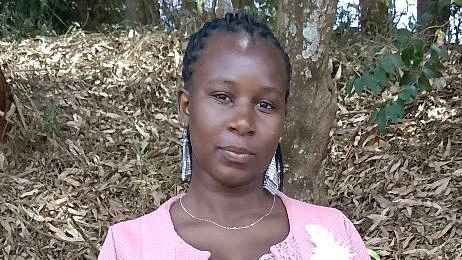
Photo Credit: Norah Joseph
Have you ever smiled while breaking inside?Have you ever been told “this should be the happiest time of your life” while feeling anything but happy?
After I gave birth, joy was expected of me no questions asked. Congratulations filled the room, cameras flashed, and people spoke of blessings and strength. Yet beneath the smiles and celebrations, I was quietly drowning. I was learning how to keep a tiny human alive while struggling to recognize myself. No one warned me that motherhood could arrive with shadows, or that loving my baby deeply could exist alongside sadness, fear, and emptiness I could not explain.
My body was exhausted in ways I had never known before. Every muscle ached, my head felt heavy, and sleep came in fragments that never felt enough. But it wasn’t just physical tiredness. My mind refused to rest. Nights blurred into mornings as I lay awake, staring into the darkness, my thoughts racing with fear, sadness, and confusion. I would hold my baby close, breathing in that soft newborn scent, and silently ask myself why I didn’t feel the joy everyone had promised me.
Instead of happiness, guilt took its place.
I felt guilty for crying when I had a healthy baby. Guilty for feeling tired when other women seemed strong. Guilty for feeling lost when I was supposed to feel complete. I loved my baby deeply, yet I felt disconnected from myself, as if the woman I used to be had vanished the moment I gave birth.
Some days, I felt completely invisible. The house would be full of people, yet I felt alone. All the attention went to my baby how beautiful they were, how well they were feeding, how strong they looked. And rightly so. But no one noticed that I was slowly disappearing behind polite smiles and quiet nods. When visitors asked how I was doing, I always said, “I’m fine,” even when my chest felt unbearably heavy and my thoughts felt dark and frightening.
I was afraid to speak.
Afraid of being judged.
Afraid of being misunderstood.
Afraid that if I told the truth, people would think I didn’t love my child.
There were days when even the simplest things felt impossible. Sometimes I couldn’t even take a shower. I would sit there and tell myself it was normal, that I would do it tomorrow, that that day was just one of those days. It’s only today, I would say. Tomorrow came, and I postponed again. Tomorrow became another tomorrow. What seemed so small to others felt like a mountain to me.
Sometimes I did things I didn’t even understand myself. I would act in ways that confused me, say things I didn’t mean, or withdraw completely without knowing why. I remember moments of sitting quietly, wondering, Who am I becoming? Why don’t I recognize myself anymore? That scared me more than anything.
Yet through all of it, my love for my baby never disappeared. That love was real, deep, and constant. What I was experiencing was postnatal depression, though at the time I didn’t have the words for it. It felt like grief without a funeral, pain without visible wounds. I was mourning the woman I had been before giving birth, the strength I thought I had lost, and the version of motherhood I believed would come naturally to me.
There were moments when I truly felt like I was failing. Moments when getting out of bed felt like a battle I wasn’t sure I could win. Moments when I questioned myself and wondered if something was wrong with me. But slowly very slowly I began to understand that nothing was “wrong.” I was healing.
My body had given life, and my mind needed care too.
The turning point didn’t come suddenly. It came in quiet moments allowing myself to cry without shame, admitting that I was struggling, accepting help instead of pretending I was okay. Each small step lifted a little bit of the weight I had been carrying alone.
I learned that postnatal depression did not mean I was weak.
It did not mean I was ungrateful.
It did not mean I was a bad mother.
It meant I was human.
I was still learning, still healing, still becoming. Some days were heavy and painful. Other days were softer, filled with small moments of light a smile from my baby, a deep breath that didn’t hurt as much, a sense that maybe I would be okay. I was there. I survived. I carried both pain and love at the same time.
By sharing my truth, I hope to remind other women that they are not alone, that help is allowed, and that healing is possible. A child is born in celebration but a mother, too, deserves care, understanding, and the space to heal.
If you are reading this and seeing yourself in my words, I want you to pause for a moment. You are not weak. You are not broken. You are not a bad mother. What you are feeling is real and it deserves care.
Postnatal depression taught me that strength is not silence. Healing began the moment I stopped pretending and allowed myself to be honest. I learned that asking for help does not make love smaller it makes survival possible.
My story is an invitation. An invitation to talk, to listen, and to hold mothers gently. Because while the world celebrates the birth of a child, a woman is being reborn too and rebirth, just like birth itself, can be painful. Let us stop asking mothers to suffer quietly. Let us choose understanding, compassion, and support.