
KENYA: Our Leadership Must Be Remembered
Mar 26, 2021
Story

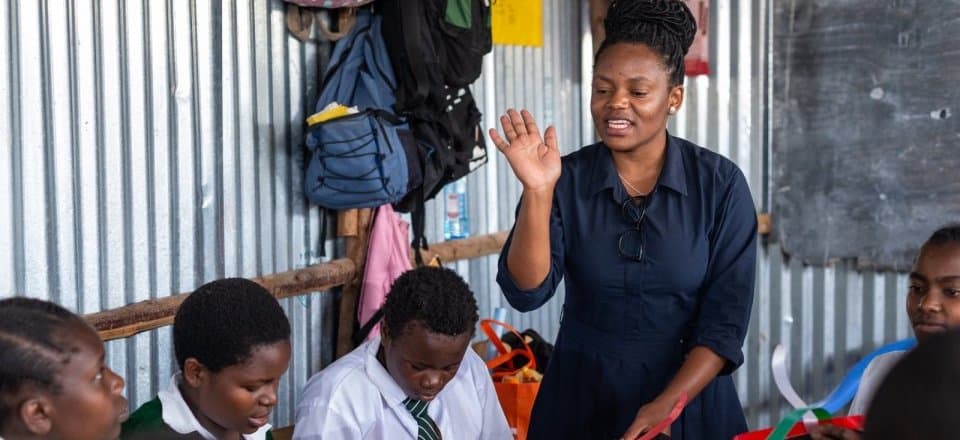
Photo © TAP Africa
Wamweru Imaya on why COVID-19 is our chance to recognize women’s vital leadership in times of crisis.
After the crisis, will we look back and remember women’s incredible leadership and contribution during this time?
Right now, during the COVID-19 crisis, the unrelenting leadership of women has never been more apparent; and yet, there is a real risk that our contributions will not be recognized or remembered. The global pandemic, which has been likened to a third world war, is a rare opportunity to rally behind women and acknowledge our role in bringing the world back to normalcy and saving the lives of many.
All around the world, women are taking on crucial caregiving duties, preparing meals for their families, cleaning, and even nursing those who are infected by the virus. Never mind that they too could become infected; women are still rising up and caring for their affected family members.
In the villages, women traders are supplying fresh food and groceries to community members, ensuring that everyone is fed and life goes on. In local town centers, women who work as tailors are busy making masks and locally-made soap, ensuring that everyone gains access to these valuable, life-protecting items, at affordable prices. In fact, they are stepping in to fill gaps left by governments in providing subsidized hand-washing soap and masks!
In the same spirit, women, who make up over 70% of the healthcare workforce, mainly as nurses and support staff, are on the front lines battling COVID-19 and saving the lives of their fellow men, women, and children, without pausing to think about how much they may be risking their own lives.
The leadership and collaboration of women across the world, especially in times of crisis, is vital to rebuilding, and it must be celebrated. I think of the recent “Meal & Book” initiative in Nairobi, Kenya. A video call with four young women from Canada, Sierra Leone, the US, and Kenya led to an inspiring initiative that is mobilizing and organizing across borders. Dr. Ranjani Somayaji, Fridah Ndoro, Roopa Somayaji, Clara Fallone, Teresia Ndoti, and I spearheaded the project, both online and offline, bringing together local women traders, tailors, liquid-soap makers, technologists, journalists, and corporate leaders to support vulnerable girls at Moonlight Centre in Nairobi’s Dagoretti Corner.
Working together on a fundraising campaign, these leaders have rallied women and men to donate to their cause, raising more than £2000 in just days, with an ultimate target of £2970. The initiative aims to run for three months, providing weekly food supplies, liquid soap, masks, sanitary pads, and books to 45 girls identified as most needy and at risk of starvation during the lockdown.
It is inspiring to see the liquid-soap maker preparing and packaging soap to be delivered to girls and their families. The tailor sitting down at her machine, cutting the pieces of cloth into shapes and sewing them together as masks, with care and precision, ensuring that the girls who wear them will be protected from coronavirus. The cereals trader packing rice, beans, and maize flour, as well as making the final packages for distribution to girls. The volunteers collecting the packages and delivering them at the girls’ doors, bringing hope of conquering the pandemic and resuming school…
Yet, on the other end, it is as powerful to see women reaching for their bank cards and donating to support groups of girls, every week for 3 months or more, while also contributing new ideas on how processes can be made more effective and efficient.
Indeed, the solidarity of women and their ability to come together in sisterhood to support their communities and individual members, is on display all around the world. Many are innovatively creating ways to support families, friends, and countrymen, keeping hope alive and reassuring us of better times to come.
While it is true that many governments and agencies could do more to bring women’s voices to the table so they can be heard at this very crucial moment, women are nonetheless standing up and taking charge on their own. It is very encouraging to see that some of the countries that have done well in beating COVID-19—new Zealand, Germany, Taiwan, Finland—are women-led! How Beautiful!
The unrelenting leadership of women across the globe in times of crisis must never be denied. We must ensure that, following COVID-19, we do not forget the contributions of women, as we have failed to recognize the contributions of so many. Certainly, stories have been written, songs have been sung, and poems have been recited in praise of women — yet, women continue to suffer and be demeaned, ignored, and disrespected.
Recently, I participated in a global Wiki-Edit-a-thon. We mobilized women around the world to review profiles of women pioneers on Wikipedia and edit them. It wasn’t a pleasant discovery to learn just how many high-achieving women pioneers’ stories had never been captured on Wikipedia: athletes, political leaders, activists, engineers, technologists, educationists, environmentalists, artists, and many more pioneers were discovered to have no presence online, with few having their profiles underwritten. I can’t help but think that the reason society rarely celebrates these important contributions is a fear-driven need to silence these powerful women and dim their light.
I wonder, following the COVID-19 crisis, will we look back and remember women’s incredible leadership and contribution during this time? Or, As in the past, will we move on and simply forget the women heroes who were at the forefront of this fight and won?
This story was published as part of World Pulse's Story Awards program. We believe every woman has a story to share, and that the world will be a better place when women are heard. Share your story with us, and you could receive added visibility, or even be our next Featured Storyteller! Learn more.