
A Letter to the One Holding the Purse
May 24, 2026
Story
Seeking
Action

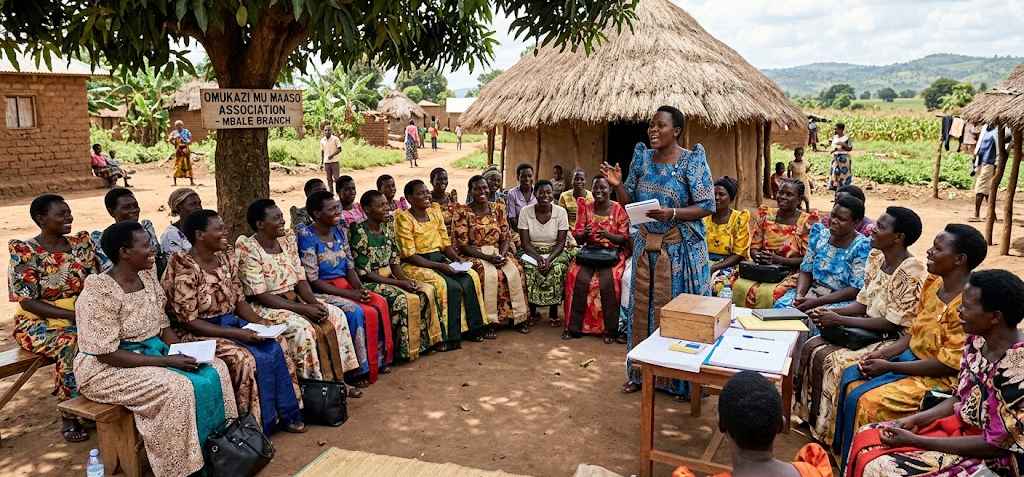
Village women meeting (AI generated)
From the collective voice of women who have led without being funded, built without being resourced, and persisted without being believed.
To You — the Program Officer, the Board Member, the Foundation Director, the Decision-Maker sitting somewhere with the power to say yes,
We need to talk. Not in the language of log frames and application forms. Not through the filter of a consultant you hired to tell you what communities like ours need. We need to talk the way people talk when they are telling the truth.
We are not waiting to be discovered. We were here before your funding cycle opened and we will be here after it closes. We have been doing this work — the quiet, relentless, underfunded work of holding our communities together — long before you learned our region existed on a map. We have done it on borrowed phones and overturned jerrycans. We have done it while turning away from jobs that would have paid us, because someone had to stay, and we chose to be the ones who stayed.
We need you to understand the weight of that choice. You call it a grant. We call it a negotiation we almost always lose. We fill out your forms in languages that are not our first. We translate decades of lived knowledge into the vocabulary you have decided counts as evidence. We squeeze the complexity of our communities into your word limits, and in doing so, we sometimes make our work less true.
And then we wait — through the silence that follows every submission, a silence so familiar it has its own texture. When the rejection comes, it is usually polite. Not aligned with current priorities. We encourage you to apply again. We apply again. We always apply again.
When you restrict our funding, you are not protecting anyone. You are telling us that you trust our analysis of the problem but not our judgment about the solution. We once spent two months navigating a grant that required pre-approval for every expenditure above fifty dollars. We needed umbrellas for a field team working through the rainy season. We waited three weeks for approval. By the time it came, the rains had ended and two of our field officers had fallen sick.
That is what restriction costs. Not paperwork. People. The twenty-two-page report templates, the quarterly check-ins, the outcome indicators you designed before ever visiting us — these are not accountability. They are the architecture of distrust. The one year we received unrestricted funding, we moved differently. We made decisions at the speed the community needed. We did more, faster, with less waste, because we were not spending a third of our energy managing your uncertainty about us.
Unrestricted funding is not a risk. It is respect. We have already proven ourselves. We proved ourselves with nothing. You are waiting to fund us at scale — wanting proof of concept before committing real resources. But sometimes the most significant things are not large. Sometimes something is a motorbike that means a health worker can reach three more villages. Sometimes it is a monthly stipend — not a salary, just a stipend — that means a brilliant young woman does not have to choose between the movement and her rent.
Judith had a notebook. Thirty shillings. In it, she kept the names and stories of women across six villages — her database, her archive, her evidence base. What we did with that notebook, with proper support, changed policy. Do not wait for us to be large before you believe we are significant.
We need you to ask uncomfortable questions. Who sits at the table when funding priorities are decided? Do the communities most affected by the problems you are trying to solve have real power in your processes — not consultation, not a ceremonial seat at the end of the table after decisions are already made?
Less than one percent of global development assistance reaches women-led organizations. One percent. We are over half the world's population. We lead the majority of community-level change work. We are the first responders in every crisis, the last to leave when things fall apart, the ones who hold the social fabric your institutions study from the outside.
One percent. If that does not trouble you, we would like to know what will. Here is what we dream funding could look like. We dream of funding that begins with a conversation, not a form. We dream of multi-year commitments, because the problems we are solving are not annual — they are generational. We dream of funders who cover full costs: not just programs, but the people who run them. The rent. The internet. The things you call overhead and we call surviving.
We dream of funders who accept our knowledge as evidence. Not just our data — our stories, our observations, our years, our presence. We dream of being asked what we need instead of being told what we qualify for.
We dream, most of all, of funders who understand that funding women is not charity. It is strategy. It is the most effective investment you can make — and we have the evidence, generated over decades with almost nothing in our hands.
This is the moment. This is the time. Authoritarianism is rising. Aid budgets are being cut. The world is contracting in ways that always fall hardest on women and the communities women hold together. This is not the time for pilot programs or another conference where we share our stories so people in comfortable chairs can be moved without being changed.
This is the time to move money. To us. Now. With trust. With flexibility. With a commitment long enough to matter. We have the answers. We have always had the answers. We have proven it over and over with almost nothing in our hands. Give us something in our hands. Watch what we do with it. We will not waste it. We cannot afford to.
With the full force of everything we know, everything we have built, and everything we are still fighting to become — The Women at the Front of Every Crisis You Have Not Adequately Funded
This letter is written for the donor who is ready to be different. We believe you exist. We are writing to find you.
#FundHerNow
- Stronger Together
- Refugee Rights
- Our Impact