
NIGERIA: Women Must Be Seen and Heard
Aug 27, 2019
Story
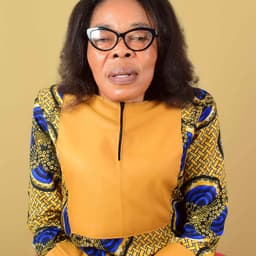

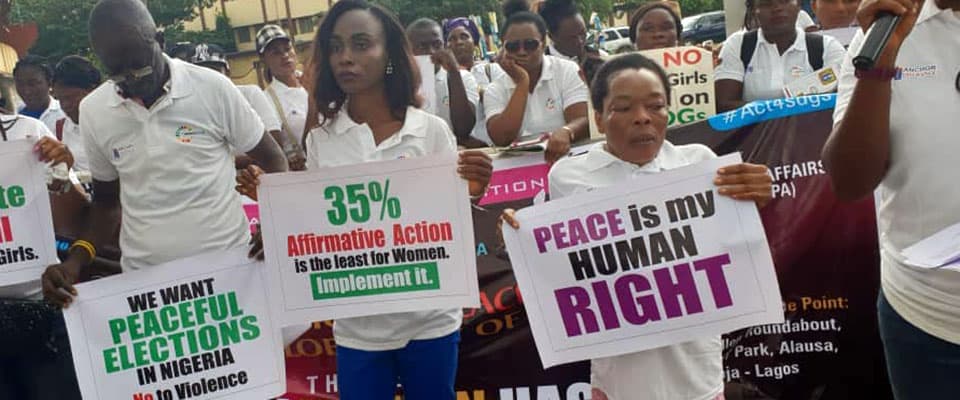
Photo courtesy of Celine Osukwu.
Celine Osukwu draws on her experiences overcoming difficulties to build solidarity with women across her country.
Shedding tears together, we came together as survivors.
I was born in the eastern part of Nigeria during a civil war. Citizens in my community, including my mother, were cut off from medical facilities, drugs, access to milk, fish, salt, meat, and other essential foods. So many women, children, and elderly persons died of Kwashiorkor, a form of malnutrition, and other complications. I survived, but as a child I suffered a severe illness that made me unconscious, and I later became disabled by Kyphosis.
Because of the nature of my disability, I have been a target for ritual killers who sell human body parts. When I was growing up, my mother was warned against letting me out of the house. Her mind has never been at rest since then. My journey in life has been distorted by difficulties emanating from discrimination, marginalization, and stigma.
Notwithstanding, I am focused toward a professional life of service aimed at achieving a secure world for children, women, persons with disabilities—and for humanity. My background directed my career choice. For two decades, I have worked earnestly to surmount the plethora of barriers caused by exclusion, poverty, religion, politics, discrimination, corruption, and land crisis—the key issues generating insecurity and unrest for us.
My job as national coordinator of the Ecumenical Food Security and Peacebuilding program paved the way for my engagement on issues of peace and security for women. I recently participated in an international pilgrimage to “walk her story” from Lagos to Kaduna, to Jos and Riyom in north central Nigeria, to Mubi, Numan, Yola, and Fufore in the north east. Through this process, I sustained a life affirming solidarity with other women affected by insecurity. I heard stories of women who faced sexual assaults, who were denied leadership positions, and who lamented the lack of funding accountability for humanitarian interventions. I heard from women denied the right to speak, denied education, and women who faced subordination and insensitivity when they tried to access services.
When I participated in sessions with women affected by violent extremism in my country, I heard similar stories. Women spoke of threats to their peace and security, including issues around access to land and resources; lack of access to health care; the influence of religion in promoting discrimination, violence and insecurity; the silence around gender based violence; and women’s marginalization in traditional leadership. I cannot easily forget the experiences of women from two communities in north east Nigeria, where women and children have been victimized, attacked, raped, and killed during a long drawn out conflict. I heard heartbreaking experiences of women and girls who were expelled from their communities because they were raped by men.
In my work in food security and peacebuilding advocacy, I have witnessed women bearing the brunt of hunger, malnutrition, and diseases. They are also burdened with the family upkeep. I have come face to face with young girls who were traded for farmland or for cows for the economic sustenance of their families.
I have met many women who, like my mother, have lost their husbands to attacks and insurgencies and were then deprived of their husbands’ property, including a house to live in. Women are often excluded from participating in community life.
In my family, my mother and her daughters, including me, are the ones farming the land and producing food that keeps the family going but ironically we are not culturally entitled to own land. We are often victims of land-related clashes because we are the ones farming the lands, sometimes in unsafe locations. We risk being sexually assaulted and killed. In many homes, women like my mother are the ones who suffer most from drought and other effects of climate change. During disease outbreaks, conflict, and economic recession, we are distressed.
When I visited three different internally displaced persons (IDP) camps, I observed that the breadwinners were women. It was startling to note that an estimated 1. 5 million out of more than 4 million displaced Nigerians are living in the IDP camps. Seventy-five percent of them are women and most are not officially registered. These displaced women are exposed to rape, killings, slavery, and health hazards. The agencies working with displaced persons face funding shortages. The living conditions of women in IDP camps are pathetic and their prospects of returning to their homes are very bleak.
Women deserve peace and security, which to me means a state of justice and goodness and balance in decisions and actions. This requires policy changes that include us. It is also of utmost importance for women to be included in decisions and actions at local churches, at the community and ecumenical levels.
Strong women’s groups and movements empower women like me to use our voices. I am using my voice to advocate for others in our communities. Through the course of my pilgrimage through Nigeria, I spoke to heads of churches, traditional leaders, government officials, and other stakeholders to advocate for women and children, and especially those living with disabilities.
On a daily basis, I make efforts to contribute to resilience in my community, and resist corruption, poverty, and insecurity. I resist the forces of religion, stereotypes, politics, and ethnic division that threaten women’s security. I refuse to be daunted by horrendous experiences. The difficult situations in my life have made me stronger.
During the “Walking Her Story” process of my pilgrimage through Nigeria, I committed to share the stories I heard of resilience and transformation of lives with others. I shared my personal experiences with more than 700 internally displaced women, standing in solidarity with them. We celebrated the gifts we bring and we transformed the injustices we experienced. Shedding tears together, we came together as survivors. Sharing freely among ourselves, we gave ourselves comfort to help heal our traumas.
My dream is to help women be seen and heard. I initiated a peace building and trauma healing project that has provided 80 women a safe space to share confidential information, and get counseling and other assistance needed to forge ahead with life. In my advocacy journeys, I call on religious leaders, governmental officials, ecumenical movements, development agencies, and civil society organizations to take action to ensure women’s peace and security.
Security is not only a concern for the UN super powers. Security is more than issues around weapons and war and territories and states. Security is a social issue. Grassroots women like me and my family bear the burden of insecurity in the most devastating manner.
Women are absolutely indispensable players and our voices are a gateway to achieve the un’s 2030 Agenda for Sustainable Development. Speaking out with my own story and the stories of other women is my bold step to improve safety and security for women in my country. The journey might be tough but I have a strong hope that someday the world will be more committed—in our families and relationships, in our public places, in our leadership, in our places of worship—to deepen our actions for justice and sustainable peace for women.
STORY AWARDS
This story was published as part of the Future of Security Is Women digital event and is sponsored by our partner Our Secure Future. World Pulse runs Story Awards year round—share your story with us, and you could be our next Featured Storyteller! Learn more.
- Future of Security Is Women